Archive for the 'Home life' Category

Tue 6 May 2008 - Cutting coal power

It really is as easy as Tony H said to switch to 100% Green Power. A quick phone call to Origin, which took under five minutes (I was already a customer). As of now my house is no longer responsible for emissions from brown coal. Which is good, ‘cos I’m afraid I’m a little cynical that the state government’s plan to capture the CO2 emissions will work very well, on a big enough scale, or any time soon.

The impact on my bill is an extra 5 cents per kWh, which based on my most recent bill is $37.95 for three months. (It’s 5.5 cents if you count GST.) It should cut my annual emissions by about 5 tonnes.

According to Channel 7 last night, they’re about to change the formula for solar panels that feed back into the grid, so it’ll be worth re-doing those calculations when the budget is announced today. But this’ll keep me going for now.

So, no more coal power for me!

(via the Greens blog.)

PS. Wednesday: The paperwork arrived. It’s actually effective 16th May (allowing for a 10 day cooling-off period). And it’s 4.99994 cents per kWh including GST.

Wed 9 April 2008 - How many men?

The 2006 Census tells us that in Australia, there are 6,863,624 men above the age of 15.

Of these some 616,033 are in defacto relationships, including same-sex relationships. 3,547,331 are married. 2,700,260 are neither.

The Census doesn’t tell us how many men wash the dishes. But let’s assume for a moment that 30% of those married or in defacto relationships do the dishes at least sometimes. Hopefully it’s higher. And let’s assume all of those who are single do the dishes. Let’s also assume that men aged 75 and over have it done for them. That gives a total of 3,726,455.

So around Australia, over three and a half million men wash the dishes. Maybe not every day (I do it every 2-3 days; the dishwasher takes care of the rest).

My question then is…

Why the hell can’t rubber glove manufacturers make gloves that fit mens’ hands?

I don’t have the biggest hands in the world, but all too often I’ll buy a rubber gloves, supposedly size Large — and there’s none bigger in the supermarket, at least not in the brand that I otherwise like — get them home and find they’re tight on me. Frequently they’re small enough that I can only just squeeze them on and off my hands, and I can feel the bloodflow being constricted as I wash my saucepans.

Or is there a brand/type in XL somewhere that I need to switch to?

Mon 31 March 2008 - It was a good day, except

I had a day off. It was a good day, except…

Worried about my dad, in hospital

Chicken curry dinner took ages to cook

Slight tummy ache. Hope it’s not Bowen Belly ™. I think I ate too much chocolate

Eldest not yet done nearly as much school holiday homework as expected

A tad stressed about something coming up later in the week

Large cockroach crawed across the kitchen counter

SecurID unexpectedly expired

Bumped my head on kids’ bunk bed

Feeling tired — still haven’t done washing up

Other than that, admittedly, mostly a good day.

Sun 30 March 2008 - Hour without power

After a little cynicism, I did in fact join in Earth Hour. Over at Marita’s, we shut off all the lights for an hour and survived by the light of the TV, candles and a torch. In fact there seemed to be few lights on in the street, and it was hard to tell how many of the neighbours had joined in. Hopefully most of them.

The whole thing did get me thinking more about my energy consumption, and after some useful comments on my post about power, I’m going to ring up this week and switch to 100% Green Power.

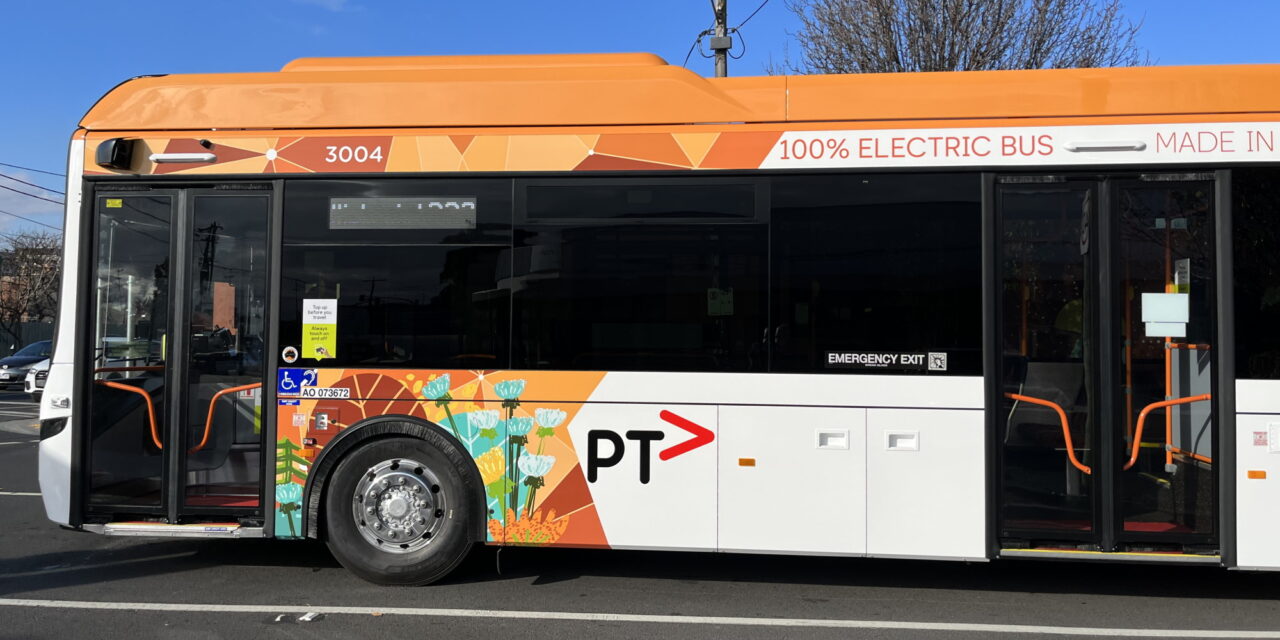
On Friday I was at the launch of the first Wind-Powered Tram. That’s not to say that it has a big sail on the top. Nor does it really only use power generated from a wind turbine. They buy the equivalent of its power consumption from a wind installation. Which is good; it will act as a mobile billboard for Green Power, and should remind us that PT (even coal-powered) is a cleaner way to get around.

I got chatting to one of the guys from the power company, Pacific Hydro. He was saying that things are really looking up for renewable energy at the moment, and that the Howard years had not been easy for them. I guess I’m not too surprised, but it was interesting hearing it from someone at the coalface (if you’ll forgive the expression) of it.

Finally, if you want a laugh, check this press release from the Citizens Electoral Council: Earth Hour: Turn out your lights for World Wide Fascism (WWF)

Fri 28 March 2008 - More solar

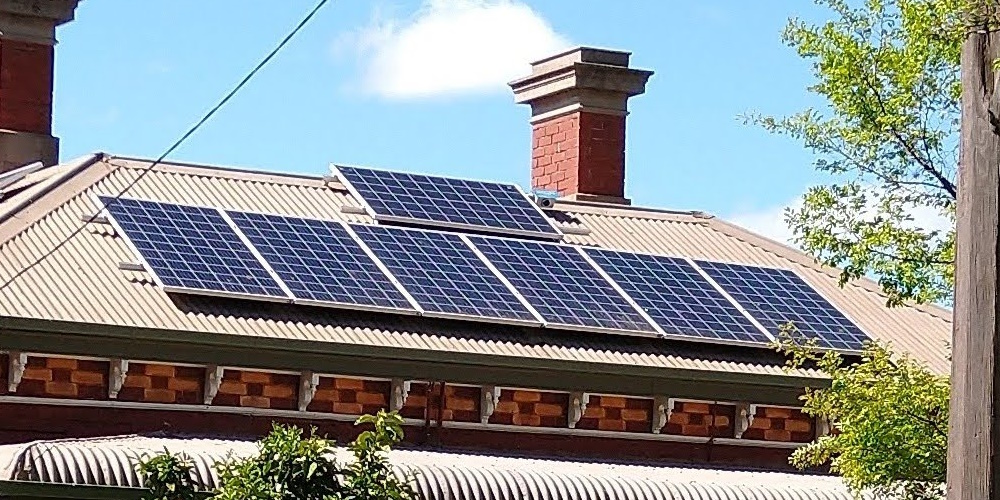
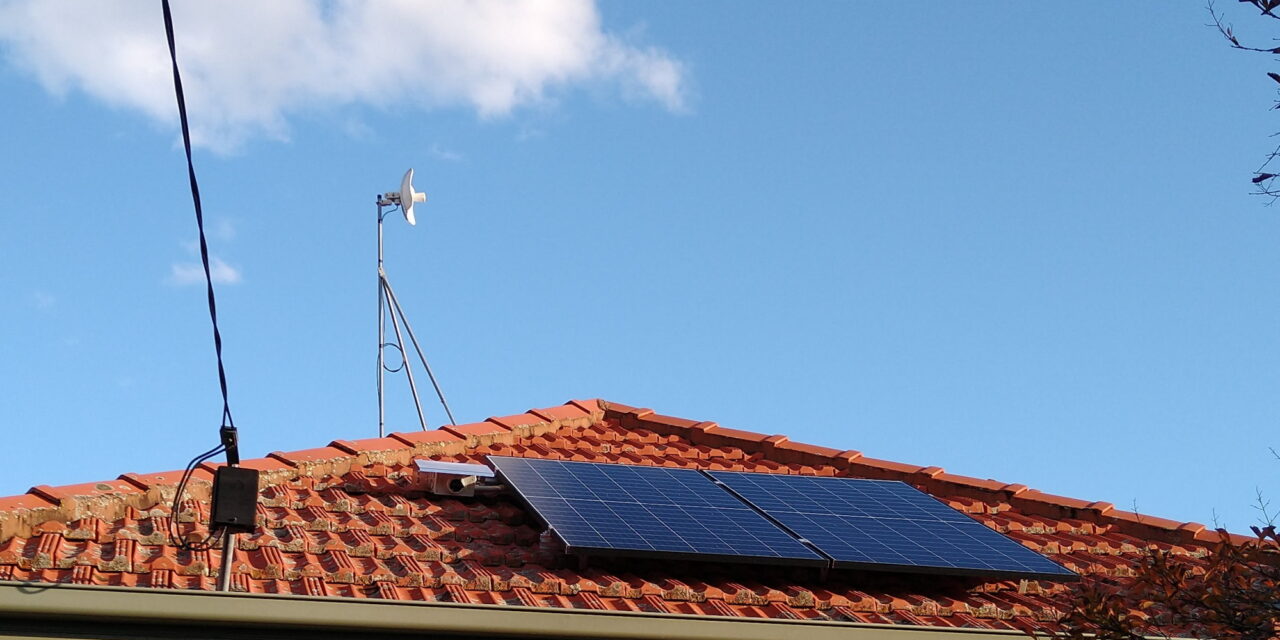
Now the solar hot water is installed and happy, I was pondering further solar installations. The question is: is it more effective to get my own solar panels, and get green power for whatever I can’t generate myself, or just switch entirely to green power?

First thing to do is reduce my consumption. My previous bills indicate it’s generally in the range of 8-10 kWh per day. And thanks to Josh giving me the Watt-O-Meter (or whatever it’s called), I know how many watts most of my appliances use. (Does anybody else want to have a go with this thing? I should pass it on.)

Almost all the bulbs have already been replaced with CFLs, need to get the last couple of tricky installations done.

I’ve isolated the computers so they are now switched off at the wall. From the Watt-O-Meter I know the computers and the XBox together use 45 W while doing nothing, so if they’re switched off two-thirds of the time (and it’s probably more than that), that’s 0.72 kWh saved. Most of the other appliances don’t draw that much power when not being used, but I’ll see what else can be done.

If I get panels, 1 kW solar installation is now about $4500 after rebates. Unlike people who are off in the wilderness, off the grid, this doesn’t use batteries, but works in conjunction with existing electricity supply: if you’re generating more than you’re using, the excess is pumped into the grid and you actually earn money for it. If you’re using more than you’re generating, the excess is pulled from the grid, and you pay for it.

Apparently typically a 1 kW solar system in Melbourne will produce 3.15 kWh per day, so effectively I’d be saving about a third of my electricity bill and associated emissions (though the amount saved depends whether that’s peak or off-peak).

A 1.5 kW system — costing about $8700 after rebates — would produce 4.7 kWh per day.

Given Victoria’s reliance on filthy brown coal for power generation, I really like this idea. It’s a bit pricey though, and I think it should be measured-up against investing in green power elsewhere which might be more efficient.

Switching to 100% green power is the other thing. (I’m on Origin’s Green for Footy plan, but that’s only 20% green power. It’s not that obvious when you join, which is why I chose it…) Tony pointed out this survey of suppliers.

For Victoria, Origin (who I’m already with) will provide 100% green power for an extra 5-6 cents (depending on whether it’s wind or solar) per kWh above the normal rates.

So which 100% green power works out cheapest?

Rough calculations based on my current usage…

100% green power for all my usage would cost about $197.10 extra per year.

Getting a 1 kW solar installation would cost me $4500 and an extra $128.11 per year to convert the rest of my power to Green.

Getting a 1.5 kW solar installation would cost me $8700 and an extra $94.17 per year.

While I’d like nothing better than to cover my roof in more solar panels, perhaps for now it’s easiest (and less capital outlay) to convert to 100% green power.

Wed 26 March 2008 - Sitting in the dark

I’m not convinced that I’ll participate in Earth Hour. Don’t get me wrong, I think it’s a terrific idea for raising awareness of climate change and energy issues. But I’m already well aware of those issues, thanks, and I’m working on reducing my emissions every day, not just one hour per year.

And besides, I’m enjoying watching Big Love (and, I’ll admit, Top GearJeremy Clarkson may be an idiot, but he’s a very entertaining idiot) on a Saturday night, and I don’t particularly want to sit in the dark.

The saving in emissions is said to be 5% if you switch off the lights for an hour. But lighting only accounts for 3% of the average household’s emissions. Let’s see that graph again:

Australian average household emissions

Another way of putting it is this: if you save 1kWh of electricity by switching off for an hour (which might be 8 x 100watt lights if you’re still using the old ones and you normally leave ten of them blazing) and a big television, you’ve saved about 1kg of CO2. But the average car will generate that in travelling less than 4 kilometres.

Which means when last weekend I twice travelled by bus to Monash Medical Centre and back (about 7.5km each way, so 30km in total), I actually saved 7.5 times the equivalent of turning off the power for an hour.

I also saved money; it costs $6+ to park there, though now I come to think of it, I spent some money on bus tickets and a snack in the hospital cafeteria. Still ahead overall though, even before taking petrol into account. The problem is I had to put up with 40 minute bus services to do it… which of course is why more people don’t do it.

Businesses participating will make more of a difference. The Age reports: At David Jones, non-essential lights and electrical equipment in 35 stores, offices and warehouses will be switched off. Staff are being asked to ensure all computers and lights in their work space are turned off..

But hold on. This is 8pm on a Saturday, when David Jones stores would be closed. Isn’t all this stuff they should be doing anyway, every night when they’re closed? With the exception of emergency lighting, refrigeration for food, and arguably advertising/shop window displays, at that time of night they should be using hardly any power anyway.

These days, all workplaces should automatically shut off power outside working hours (with overrides if people are working late), including putting computers to sleep if possible.

So anyway, Earth Hour itself will barely make a difference to emissions, especially for households. But in terms of raising awareness, hopefully it makes some impact, and people get better at conserving energy right through the year, not just for an hour.

PS. 10pm.

Tue 18 March 2008 - The garbologists

Nowadays I have a camera in my mobile phone, so virtually anywhere I am, I can take a picture.

There was a morning, back in 1993 or so, when I wish I’d had a camera with me. I was waiting for a tram to work outside my old flat in Power Street, Hawthorn. That place was what you’d call “handy for public transport”. The city-bound tram stop was literally at the end of the driveway; to Camberwell and East Burwood was across the street. If you were headed towards the city, you could hear the tram screeching around the corner, just down the road, so you knew if you had to hurry to the stop. The railway station was 8 minutes’ walk away, down the sidestreets, and overall this was the quicker to get into the city on weekdays. Two other tram routes (69 and 70) were also in walking distance. It was PT heaven.

So anyway I was waiting for a tram to East Burwood when two garbage trucks came past, one in each direction. They stopped opposite each other, and the garbos on the back of each one jumped off to empty numerous bins into the backs of the trucks. They probably acknowledged each other too, in that non-waving, nod of the head and gruff “uhhh” kind of manly way. They finished with the bins, threw them back onto the nature strip and jumped onto the backs of their trucks and drove off.

I think it was soon after that that they phased out that kind of garbage collection, in favour of wheelie bins. Such a picture would have captured an everyday scene which, like chimney-sweeps and milkmen, have completely vanished from the landscape. When I was a kid, the garbos generally came past very early, at least when we lived on main roads like Hotham Street and Inkerman Road. We sometimes jokingly referred to them as garbologists.

It came to mind because I was clicking around on the council web site and found a page about the phasing out of recycling crates, also in favour of wheelie bins. Apparently ongoing reforms to workplace health and safety had a part in it, though I suspect mechanisation and single-person operated garbage trucks are simply much cheaper to run.

I wonder if anybody documents this kind of thing? (This one from Sydney was the closest I could find on a quick look in PictureAustralia. And check this great photo of a milkman and his son.)

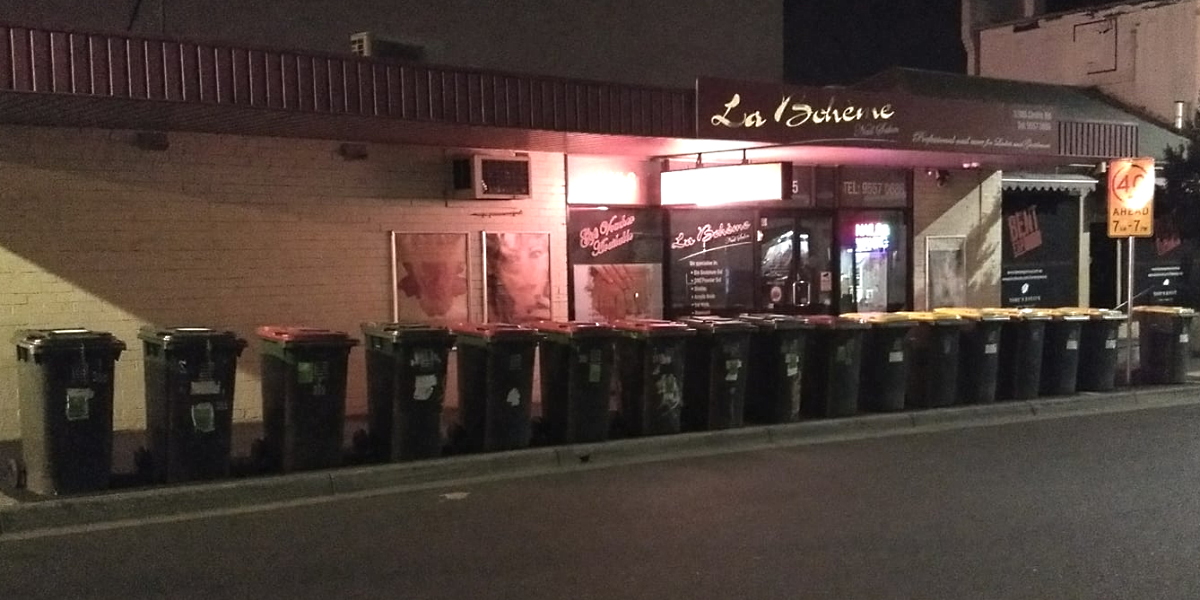
To get to the point: I rang up the council yesterday to arrange to swap my 240 litre general rubbish bin for a 120 litre one. I rarely put more than about 30 litres per week in it, and although it doesn’t save much annually having the smaller bin (about $30 I think), I thought I might as well switch so the bin takes up less space. Besides, the bin I inherited when I moved in has a small hole in it.

Evidently I have to leave the bin lying down on the nature strip, like a disabled turtle, and they’ll come past sometime in the next few days and switch it over. Easy.

Edit: A link in the original post hid a bunch of text which left it making no sense. Link removed.

Thu 13 March 2008 - Powered by the sun

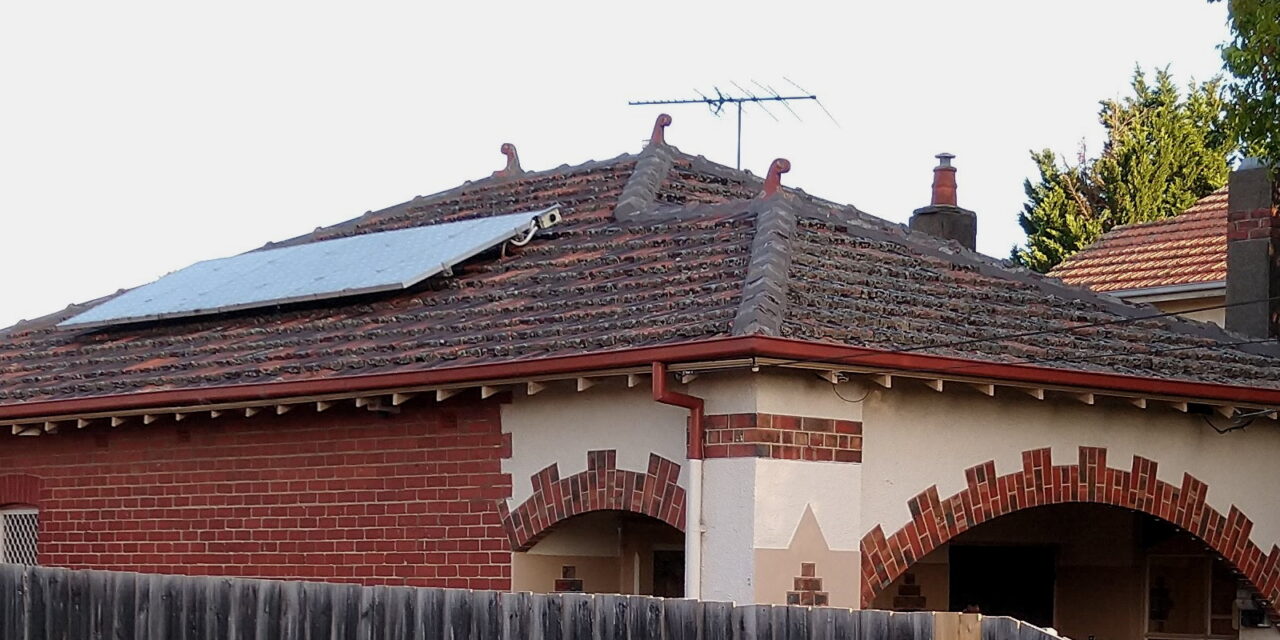
They came with a compass. Which way’s north? Ah, thought so. Do you want it on the front, or the side? I don’t mind… front’s better — I’ll be setting a good example. Behold: a green geek.

The ladder went up. The collector went up and got connected. The old tank got ripped out and taken away. Some rummaging inside the roof. New tank in the old one’s place. It even looks more stylish. (Evidently 90s tanks were square and boxy; this one’s smooth and round.)

The way it works is pretty simple. An electric pump sends the water into the roof, so it goes through the collector and heats up as it goes, before being stored in the tank. When you turn on the tap, the system either gives the water additional heat from the gas if it’s not warm enough, or mixes it with cold water if it’s too hot (which apparently is common on sunny days).

Solar panel Water tank and booster

The installation wasn’t entirely without drama. After the two guys had gone, the electrician turned up to install the new power point for the pump. He asked me if I had a shifter.

A shifter? I, and I realise I’m showing my mechanical ineptitude here, didn’t know that he was talking about, and said no. He kept asking, with increasing disbelief that I wouldn’t have such a device.

It eventually became apparent that he spotted a dripping water connection, and what he was asking for was an adjustable spanner. Apparently they’re really called shifters. How did I live on this earth for 37 years without knowing that? He did some fiddling, and all was good.

So now I have (almost) free hot water, at least until the sun fades away into a white dwarf, a few billion years from now.